
Overview
A Sacred Journey to the Abode of Lord Shiva
The Kedarnath Dham Yatra is one of the most revered pilgrimage journeys in Uttarakhand, offering travellers an opportunity to experience spirituality amid the magnificent landscapes of the Garhwal Himalayas. Located in the Rudraprayag district of Uttarakhand at an altitude of approximately 3,584 metres, Kedarnath Temple is dedicated to Lord Shiva and is regarded as one of India’s twelve Jyotirlingas. It is also one of the important destinations of the Char Dham Yatra and the Panch Kedar tradition.
Surrounded by towering Himalayan peaks and the Mandakini valley, the journey to Kedarnath combines pilgrimage, trekking, nature and mountain experiences. Unlike many other pilgrimage destinations, Kedarnath is reached through a high-altitude mountain route, making the journey itself an important part of the experience.
With Safarnex Kedarnath Dham Yatra Packages, travellers can experience the journey with planned transportation, accommodation, meals and trip coordination, allowing them to focus on the spiritual and scenic aspects of the pilgrimage.
About Kedarnath Dham
Kedarnath is one of the most significant Shiva temples in the Himalayan region. The temple stands in a high-altitude valley near the Mandakini River and is surrounded by dramatic mountain landscapes.
According to the official Shri Badarinath Kedarnath Temple Committee, Kedarnath is one of the twelve Jyotirlingas of Lord Shiva and forms part of the Panch Kedar pilgrimage tradition. The temple’s history and religious significance are closely associated with traditions surrounding the Pandavas and Lord Shiva.
The temple is traditionally associated with Adi Shankaracharya, and the present stone temple is renowned for its distinctive architecture and massive stone construction. The official temple committee also notes that an earlier shrine existed at the site.
For pilgrims, the arrival at Kedarnath is not simply about reaching a destination. The trek through the mountains, the changing landscapes, the sound of the Mandakini and the sight of the temple against the Himalayan backdrop make the entire journey memorable.
Kedarnath Dham Yatra from Delhi
The Kedarnath Yatra from Delhi generally begins with a road journey towards Uttarakhand. Depending on the selected Safarnex itinerary, the route can pass through important Himalayan gateway towns such as Haridwar, Rishikesh, Devprayag, Srinagar, Rudraprayag, Guptkashi and Sonprayag before reaching the trekking point.
From Gaurikund, pilgrims continue towards Kedarnath on foot. Uttarakhand Tourism describes the Gaurikund–Kedarnath route as a high-altitude trek, with the journey passing through mountain landscapes and waterfalls.
The road journey and trek together create a complete Himalayan pilgrimage experience, combining scenic drives, mountain villages, rivers, forests and the sacred Kedarnath shrine.
The Kedarnath Trek Experience
The trek to Kedarnath is an important part of the pilgrimage.
Starting from Gaurikund, the route gradually climbs through the Himalayan terrain towards Kedarnath. The journey requires physical effort and can be demanding because of the altitude and changing weather conditions.
Pilgrims can experience:
Himalayan mountain landscapes
Forest and valley views
Mountain streams and waterfalls
Views of the Mandakini valley
Traditional mountain settlements
High-altitude terrain
The first views of Kedarnath Temple
Uttarakhand Tourism classifies the broader Kedarnath–Vasuki Tal trekking route as moderate to challenging and lists Kedarnath at approximately 3,584 metres, highlighting the importance of preparation for high-altitude travel.
Spiritual Significance of Kedarnath
Kedarnath holds a special place in Hindu pilgrimage traditions.
The temple is dedicated to Lord Shiva and is recognised by the Shri Badarinath Kedarnath Temple Committee as one of the twelve Jyotirlingas. Kedarnath is also one of the five temples associated with the Panch Kedar tradition.
According to the traditional legend, the Pandavas sought Lord Shiva after the Mahabharata war. Shiva is believed to have appeared in the form of a bull and later manifested at different locations associated with the Panch Kedar temples. At Kedarnath, the hump is traditionally worshipped.
These traditions contribute to Kedarnath’s importance as both a pilgrimage destination and a cultural landmark in Uttarakhand.
Kedarnath Temple
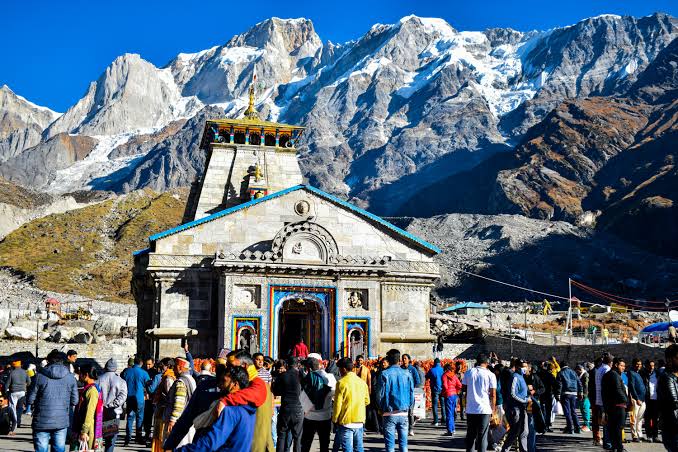
The Kedarnath Temple stands against a spectacular Himalayan backdrop and is constructed from large stone slabs. Its architecture reflects the character of the high Himalayan region.
The temple complex includes the main sanctum and assembly area, with the sacred form of Lord Shiva worshipped within the sanctum. A Nandi statue stands outside the temple entrance.
The combination of ancient religious traditions, distinctive stone architecture and the surrounding Himalayan landscape makes the temple one of the most remarkable destinations of the Uttarakhand pilgrimage circuit.
Places Covered on a Kedarnath Yatra
Haridwar
A major spiritual gateway to Uttarakhand, Haridwar is situated on the banks of the Ganga and is commonly used as a starting point for Himalayan pilgrimage journeys.
Rishikesh
Known for its spiritual atmosphere and location along the Ganga, Rishikesh serves as another important gateway towards the Garhwal Himalayas.
Devprayag
Devprayag is known for the confluence of the Bhagirathi and Alaknanda rivers, forming the Ganga.
Rudraprayag
Located at the confluence of the Alaknanda and Mandakini rivers, Rudraprayag is an important point on the route towards Kedarnath.
Guptkashi
Guptkashi is an important town on the Kedarnath route and a common overnight halt for pilgrims.
Sonprayag
Sonprayag is an important access point for the journey towards Gaurikund and Kedarnath.
Gaurikund
Gaurikund is the traditional starting point for the trek towards Kedarnath. Uttarakhand Tourism identifies it as the point from which the Kedarnath trek begins.
Kedarnath Dham
The final and most significant destination of the journey, where pilgrims visit the sacred Kedarnath Temple and spend time in the Himalayan surroundings.
Best Time for Kedarnath Yatra
The Kedarnath pilgrimage is seasonal because of the high-altitude Himalayan environment and winter conditions.
The official Shri Badarinath Kedarnath Temple Committee lists May through November among the months for visiting Kedarnath, while actual temple opening and closing dates vary by year.
Summer Season
The opening months generally provide pleasant mountain conditions compared with the winter season. This is a popular period for pilgrimage and trekking.
Monsoon Season
The Himalayan region can experience heavy rainfall during the monsoon. Road and trail conditions can change, so travellers should check current weather and route advisories before departure.
Autumn Season
Post-monsoon months can offer clearer mountain views and cooler conditions, making this a popular period for Himalayan travel.
Winter Season
Heavy snowfall and extreme weather affect accessibility to the high-altitude shrine. The temple’s seasonal opening and closing schedule should always be checked before planning a journey.
Why Choose a Kedarnath Yatra Package?
Planning a Kedarnath pilgrimage independently involves coordinating transportation, accommodation, trekking arrangements and multiple mountain-route transfers.
A professionally organised Kedarnath Dham Yatra Package brings these elements together into one planned journey.
With Safarnex, travellers can choose from group and customised travel options based on their preferred dates, group size and requirements.
Planned Transportation
Travel arrangements are coordinated from the starting point to the Himalayan region and back.
Comfortable Accommodation
Accommodation is arranged at suitable locations according to the selected package and availability.
Meal Support
Meals are provided as specified in the selected itinerary.
Trip Coordination
A dedicated trip coordinator helps travellers with important journey logistics and coordination.
Group & Private Options
Safarnex can plan both scheduled group departures and customised private Kedarnath trips.
Kedarnath Yatra with Safarnex
A Kedarnath journey is more than a regular holiday. It is a combination of faith, trekking, Himalayan landscapes and personal experience.
From the plains of Uttarakhand to the high-altitude valleys surrounding Kedarnath, every stage of the journey brings a different landscape and atmosphere.
Whether you are travelling with family, friends, a group or on a customised pilgrimage plan, Safarnex helps you organise the essential elements of your Kedarnath journey.
Plan Your Kedarnath Dham Yatra
If you are planning a Kedarnath Yatra from Delhi, Safarnex can help you organise your journey with transportation, accommodation, meals and trip coordination according to your selected package.
Start Planning Your Journey
📅 Select your travel dates
👥 Share your number of travellers
📍 Choose your departure city
💬 Get the latest Kedarnath package details
Safarnex — Travel Beyond the Ordinary.
Highlights
- Kedarnath Temple Darshan — Seek blessings at one of the most revered Shiva temples in the Himalayas.
- Kedarnath Trek — Experience the scenic mountain trail from Gaurikund towards Kedarnath Dham.
- Majestic Himalayan Landscapes — Witness dramatic peaks, valleys, rivers and high-altitude scenery.
- Mandakini River — Follow the beautiful Mandakini Valley during the journey towards Kedarnath.
- Spiritual Himalayan Experience — Experience the peaceful atmosphere surrounding the sacred Dham.
- Scenic Uttarakhand Route — Travel through beautiful destinations including Rishikesh, Devprayag, Rudraprayag and Guptkashi, depending on the itinerary.